You’ve probably stood in a store aisle staring at two bags of chillies. One says “organic.” One doesn’t. The organic one costs more. So you put it back. Fair enough. Most of us have done this.
But here’s the thing. Once you understand what “organic” really means, that price tag starts to make sense. Let’s break it down. No jargon. No fluff.
What Does "Organic" Actually Mean?
Simple answer: no synthetic pesticides. No chemical fertilizers. No GMOs. Organic farmers work with nature, not against it. They rotate crops. They use natural compost. They let the soil breathe.It’s slower. It’s harder. That’s why it costs a bit more.
But the payoff shows up in your food, and eventually, in your body
1. Fewer Chemicals on Your Plate
- This one’s obvious, but worth saying clearly.
- Conventional produce is often sprayed with pesticides.
- Some residue stays on the skin, even after washing.
- Organic produce skips this step entirely.
- Less spray. Less residue. Less to worry about.
2. Fewer Chemicals on Your Plate
- Ask anyone who’s tried organic tomatoes.
- They taste different. Richer. More like an actual tomato.
- Why? Healthier soil grows healthier plants.
- Healthier plants produce more flavor compounds naturally.
- It’s not magic. It’s just good farming.
3. Fewer Chemicals on Your Plate
- Several studies show organic crops carry higher levels of antioxidants.
- They also tend to have lower cadmium levels, a heavy metal found in some fertilizers.
- That’s not a small thing. Over years, small differences add up.
4. Good for the Soil, Good for the Planet
- Organic farming keeps soil alive.
- Earthworms. Microbes. Natural nutrients. All intact.
- Conventional farming, over time, can strip soil of this life.
- Choosing organic groceries supports farms that think long-term, not just this season.
5. No GMOs, No Guesswork
- Organic certification rules out genetically modified seeds.
- If that matters to you, organic is the only guarantee.
- You’re not decoding ingredient labels. The certification does that job for you.
6. Supports Small and Local Farmers
- Big commercial farms dominate conventional produce.
- Organic farming is often done by smaller, family-run operations.
- When you buy organic groceries, you’re usually supporting a smaller supply chain.
- That means fresher produce and a farmer who actually cares about the harvest.
7. Peace of Mind for Your Family
- This might be the biggest one.
- You don’t have to double-check every label.
- You don’t have to worry about what’s “hidden” in the food.
- Organic groceries take that mental load off your plate. Literally.
How to Switch Without Breaking Your Budget
Going fully organic overnight isn’t realistic for most people. And it doesn’t need to be.
Here’s a smarter way to start:
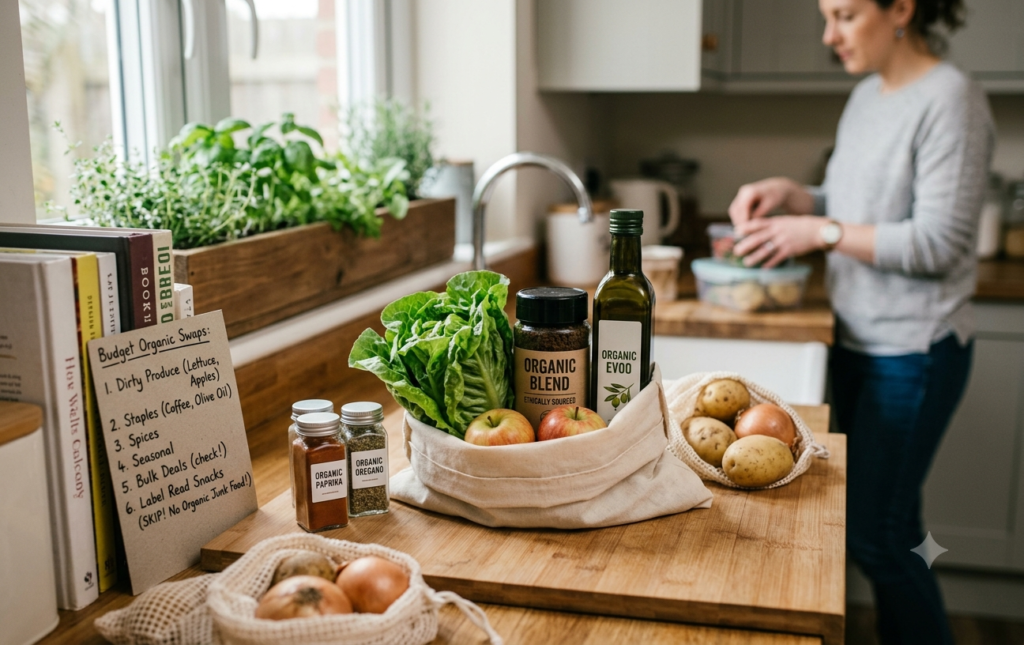
- Start with the “dirty” produce. Some fruits and vegetables absorb more pesticides than others. Start there.
- Buy organic staples first. Coffee, olive oil, and spices are used often. Small upgrades, big impact over time.
- Shop seasonal. Seasonal organic produce is usually cheaper and fresher.
- Look for bundle deals. Many organic stores offer discounts on first orders or bulk buys.
- Skip the “organic junk food” trap. Organic doesn’t always mean healthy. Read labels, even on organic snacks.
You don’t need a full pantry overhaul. Just start swapping, one item at a time.
A Few Myths, Cleared Up
Myth: Organic food never spoils faster. Actually, it sometimes does, since there are no artificial preservatives. That’s a good thing.
Myth: Organic means pesticide-free. Not entirely true. Organic farming allows certain natural pesticides. Just not synthetic ones.
Myth: Organic is only for produce. Nope. Organic coffee, oils, grains, and even hand sanitizers exist too.
Final Thoughts
Switching to organic groceries isn’t about being perfect. It’s about making better choices, one purchase at a time. Start small. Start with what you use daily. Build from there. Your body, your kitchen, and honestly, your taste buds will notice the difference.
Is organic food really worth the extra cost?
For many people, yes. You get fewer chemicals, better taste, and support for sustainable farming. Start with a few staple items and see the difference for yourself.
What organic groceries should beginners buy first?
Coffee, olive oil, spices, and leafy greens are a good starting point. These are used often and show a noticeable quality difference.
Does organic produce last as long as regular produce?
Not always. Without artificial preservatives, some organic items spoil a bit faster. Buy smaller quantities more often for best freshness.
Are organic products always healthier?
Mostly, but not automatically. Organic snacks and packaged foods can still be high in sugar or salt. Always check the label.
Where can I buy quality organic groceries online?
Look for certified organic stores that clearly list sourcing details, like House of Coco, which offers organic groceries, juices, and everyday essentials with certified quality.